
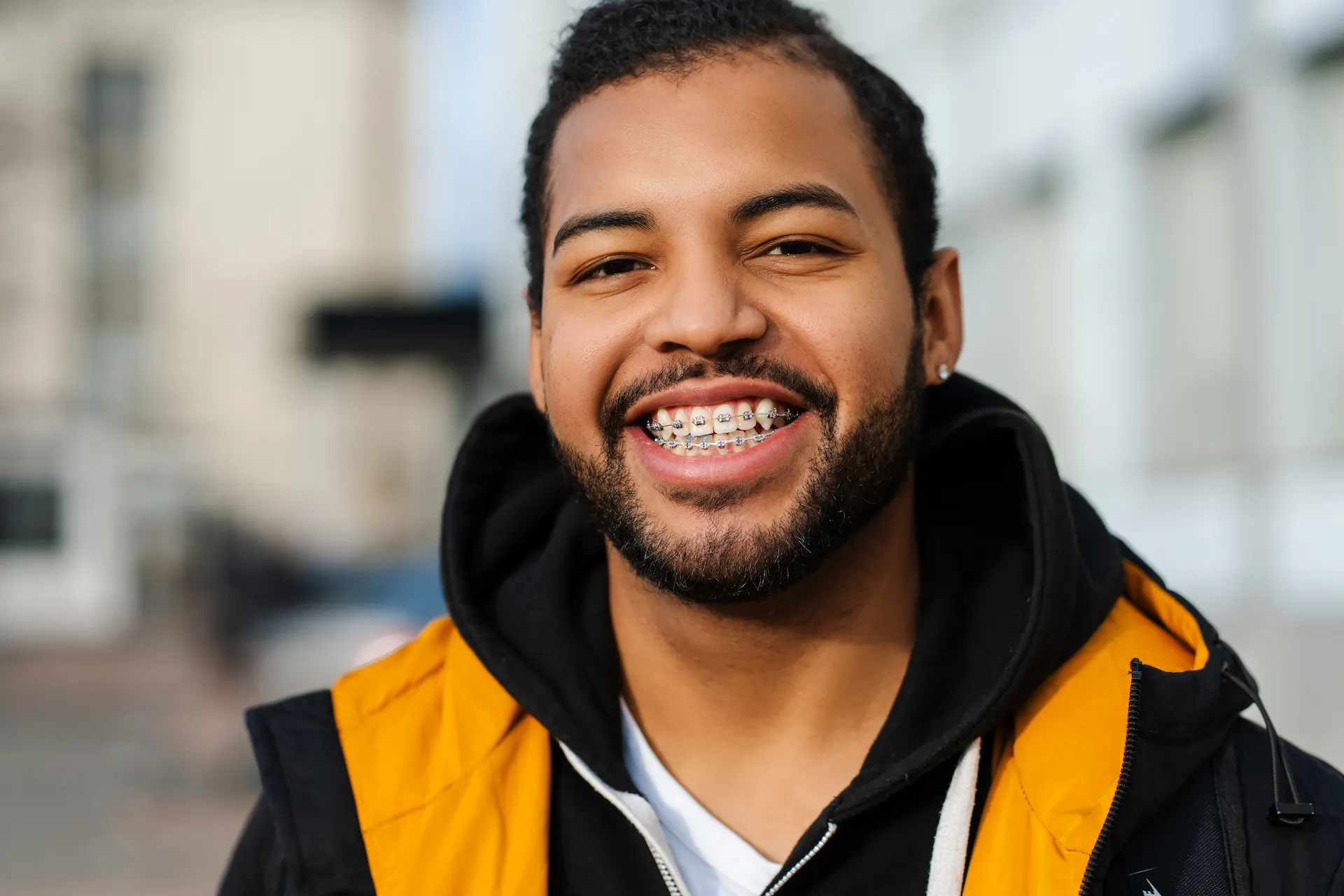
Have you recently noticed a crooked front tooth and wondered what caused it? Whether it’s a tooth that’s gradually shifted over time or one that’s always seemed out of place, you’re not alone.
Crooked front teeth are a common orthodontic concern, and the reason behind it isn’t always as straightforward as you might think.
In many cases, a crooked front tooth develops because of genetics, crowding, jaw development, childhood habits, or natural changes that occur as we age. Understanding why crooked teeth happen is the first step toward finding the right solution.
In this guide, we’ll explain what causes a crooked front tooth, when it’s worth scheduling an orthodontic evaluation, and how orthodontists approach treatment.
What Does It Mean to Have a Crooked Front Tooth?
A crooked front tooth simply refers to a front tooth that isn’t properly aligned with the surrounding teeth. It may appear rotated, pushed forward, tucked behind neighboring teeth, or shifted to one side.
While many people view this as a cosmetic concern, tooth alignment is part of your overall bite and oral health. That’s because your teeth work together as a system.
The size of your jaw, the position of your teeth, and how your upper and lower jaws fit together all influence where each tooth settles. When one part of that system changes, it can affect the position of a front tooth.
Sometimes a crooked front tooth doesn’t cause any functional problems. In other cases, it may make brushing and flossing more difficult, contribute to uneven tooth wear, or affect how your bite comes together.
What Causes a Crooked Front Tooth?
There isn’t a single reason why a crooked front tooth develops. During an orthodontic evaluation, we look at several factors before recommending treatment because every smile is different.
Some of the most common causes include:
- Genetics: Your jaw size and shape, along with the way your teeth naturally erupt, are often inherited.
- Tooth crowding: When there isn’t enough room in the dental arch, front teeth may rotate or overlap as they compete for space.
- Jaw development: Differences in jaw growth can influence how front teeth align over time.
- Childhood habits: Thumb sucking, prolonged pacifier use, and tongue thrusting may contribute to tooth movement during development.
- Early or delayed loss of baby teeth: Baby teeth help guide permanent teeth into place. Losing them too early or too late can affect eruption patterns.
- Dental trauma: An injury can shift a tooth immediately or change how it develops over time.
- Gum disease: In adults, bone loss caused by periodontal disease can allow teeth to loosen and gradually shift.
- Natural age-related movement: Teeth naturally move throughout life, even if you’ve never had orthodontic concerns before.
In many cases, more than one factor is involved. For example, you may inherit a smaller jaw while also experiencing natural tooth movement later in adulthood. Understanding the complete picture allows us to recommend treatment that’s tailored to your specific needs.
Why Do Crooked Front Teeth Develop in Children vs. Adults?
The reasons for a crooked front tooth often depend on your age. While children typically experience alignment issues related to growth and development, adults are more likely to notice changes caused by tooth movement, gum health, or previous orthodontic treatment.
Reasons for Crooked Front Teeth in Children
In children, genetics, jaw growth, tooth crowding, and the timing of baby tooth loss are among the most common contributors. Oral habits like thumb sucking or prolonged pacifier use can also influence how permanent teeth erupt.
Many parents become concerned when they notice a front tooth coming in crooked, but in some cases, teeth naturally improve as additional permanent teeth erupt and the jaws continue developing.
Reasons for Crooked Front Teeth in Adults
Adults often experience different causes for crooked teeth. Teeth can gradually shift years after braces if retainers aren’t worn as recommended. Gum disease may weaken the supporting structures around the teeth, allowing movement to occur.
Even without previous orthodontic treatment, small changes in tooth position can happen naturally over time.
Many adults also wonder whether wisdom teeth are responsible for crooked front teeth, even if they’ve already had orthodontic treatment. Current research suggests wisdom teeth are not considered the primary cause of relapse or front tooth crowding, but natural age-related changes can still contribute to gradual shifting.
The good news is that tailored orthodontic treatment can often correct crooked front teeth at any stage in life. An evaluation helps determine what’s causing the movement and whether treatment is appropriate.
When Should You See an Orthodontist About a Crooked Front Tooth?
A crooked front tooth isn’t always an urgent problem, but it’s a good idea to have new or worsening changes evaluated. Identifying the cause early can help determine whether treatment is needed now or whether monitoring is the best approach.
You should schedule a consultation with an orthodontist if you notice:
- A front tooth has recently shifted.
- Crowding appears to be getting worse.
- It’s becoming harder to brush or floss around the tooth.
- Your bite no longer feels comfortable.
- You experience jaw discomfort.
- Changes in tooth position affect your speech.
- You’re unhappy with how your smile looks.
During your consultation, we’ll examine your bite, discuss your concerns, and determine what’s contributing to the misalignment. We also use digital imaging or other diagnostic tools to better understand your tooth alignment before recommending a personalized treatment plan.
Understanding the Cause Is the First Step Toward the Right Solution
A crooked front tooth can develop for many different reasons, from genetics and crowding to natural tooth movement later in life. While the tooth itself may be the most noticeable concern, understanding what’s causing the misalignment is the key to choosing the right treatment.
If you’ve noticed changes in your or your child’s smile, our team at Orthobar is here to help. We can help you identify why the misalignment is happening, answer your questions, and recommend personalized treatment options that support a confident smile for years to come.
Schedule a complimentary consultation with our orthodontists to learn more about how we can give you the smile you’ve always wanted!